History of the Breed
German Origins: A Breed with a Purpose
The Pudelpointer’s history began with a clear goal: to develop a versatile hunting dog that combined intelligence, cooperation, and a love of water with exceptional pointing ability, endurance, and determination in the field.
The first cross to establish the breed took place in Germany in 1881. The sire, “Tell,” was an English Pointer belonging to the future Kaiser Frederick III. The dam, “Molly,” was a German hunting Pudel owned by Hegewald, a noted writer and authority on hunting dogs.
This pairing laid the foundation for a breed developed around the practical needs of hunters. Its purpose was to produce a dependable partner capable of searching for game, pointing, and retrieving on both land and water.
Combining Two Hunting Traditions
Each foundation breed contributed qualities essential to the Pudelpointer’s development.
The German hunting Pudel brought intelligence, a strong retrieving instinct, enthusiasm for water, and a willingness to work closely with its handler. Its trainability and protective coat were also important to the vision for the new breed.
The English Pointer contributed an intense desire to hunt, a keen nose, a natural pointing instinct, and the stamina to search productive ground throughout a day in the field.
The goal was to bring these abilities together in a balanced dog: an eager hunter with the independence to find game and the cooperation to remain a responsive partner.
Developing the Pudelpointer
Establishing that balance required generations of selective breeding. Early breeders found that Pudel characteristics appeared strongly in the offspring, leading them to introduce considerably more English Pointers into the developing breed.
During the first 30 years, the breeding program used only 11 Pudels compared with more than 80 Pointers. This continued selection helped establish the combination of working ability, temperament, and coat associated with the Pudelpointer today.
Later Pointer introductions were made occasionally, including efforts to rebuild breeding stock after the two World Wars. Throughout its development, the central purpose remained consistent: preserving a capable, cooperative hunting dog suited to demanding work.
Versatility Before and After the Shot
The Pudelpointer was developed to contribute throughout the hunt. Before the shot, its work centers on searching for game, using its nose effectively, and establishing point. After the shot, retrieving and recovering game become equally important.
That versatility extends across land and water. A productive day may require a dog to search open country, work through thick cover, enter water willingly, and remain focused as conditions change.
The breed’s enduring appeal lies in this combination of desire, endurance, and cooperation. Hunters value a dog that brings enthusiasm to its work while remaining attentive to the partnership with its handler.
Appearance Shaped by Working Ability
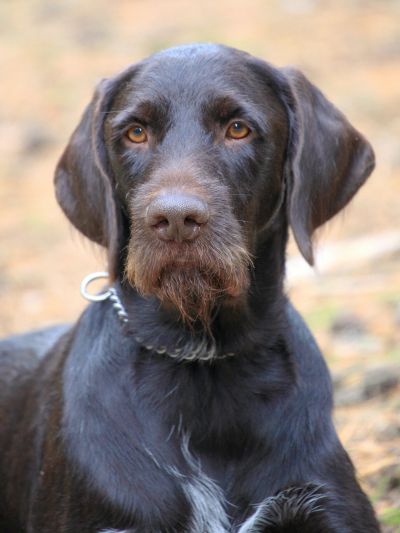
The Pudelpointer is a medium-sized hunting dog with an athletic build suited to sustained activity. The breed is commonly described as standing approximately 22 to 26 inches at the shoulder and weighing between 45 and 70 pounds, with variation among individuals.
Coat colors range from dark brown to lighter, autumn-leaf shades, with black also occurring. The ideal coat is harsh, wiry, and dense, providing protection during work in cover and exposure to changing weather.
These physical qualities serve a practical purpose. Sound structure supports efficient movement and endurance, while a protective coat helps the dog carry out the work for which the breed was developed.
The Journey to North America
The first Pudelpointers arrived in North America in 1956, establishing the foundation for the breed on this continent.
As interest grew, breeders and hunters faced the responsibility of maintaining the qualities that had shaped the Pudelpointer in Germany. Preserving natural hunting ability, cooperation, and versatility became central to its continued development in North America.
That commitment led to the founding of the Pudelpointer Club of North America in Canada in 1977, creating an organization dedicated to protecting the breed’s working heritage and guiding its future.